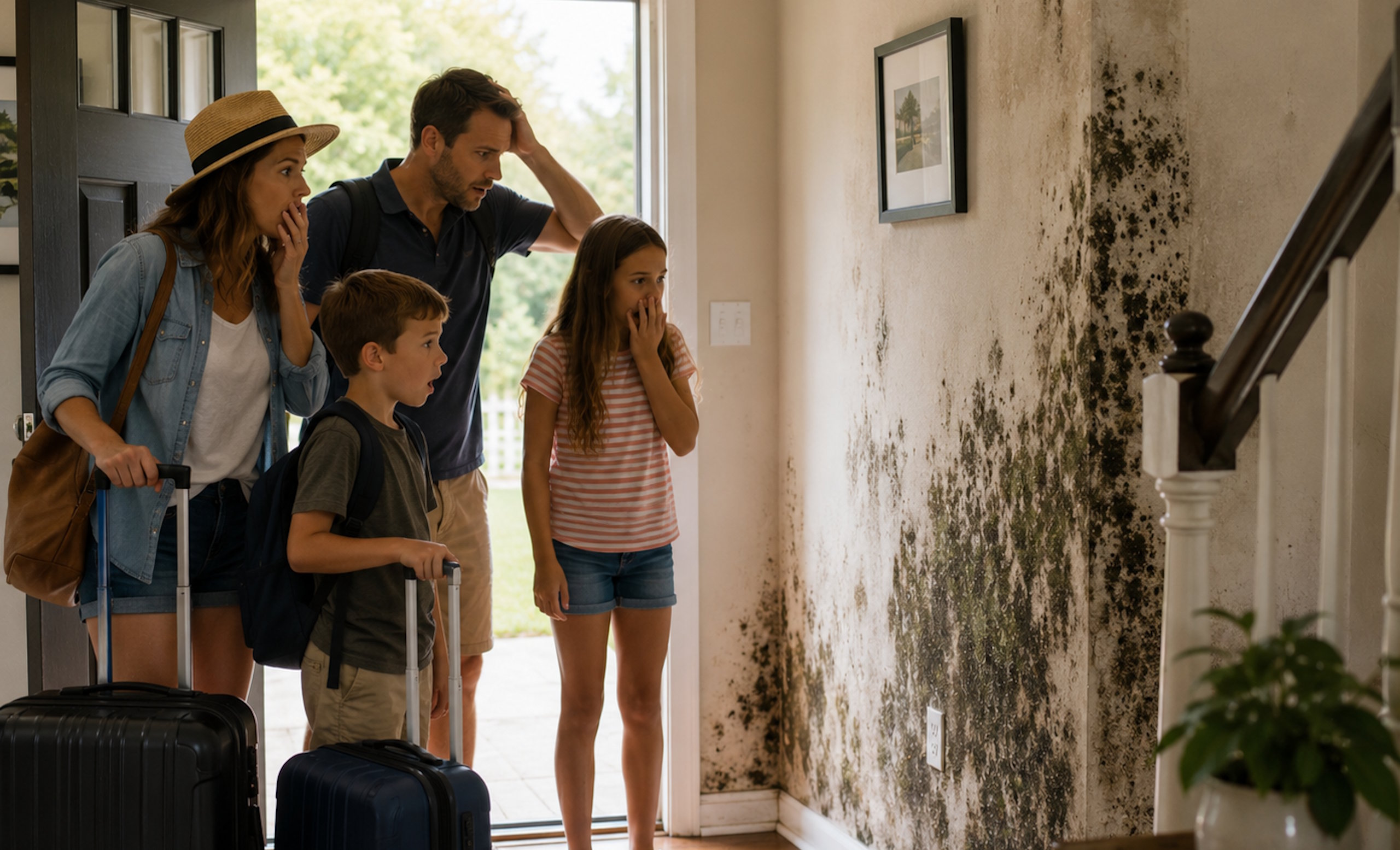
Vacations are supposed to give you a break from stress, not create new problems back home. But many homeowners return from a week away only to discover musty odors, new stains, or even visible mold growth that wasn’t there before. Mold doesn’t need much to thrive — just moisture, warmth, and time. And when a home sits closed up, unventilated, and unmonitored, those conditions can develop quickly.
It may seem like mold grows fastest when no one is around to notice early warning signs, but in reality, that means mold issues have the opportunity to become much worse. A small leak continues dripping. Humid air stays trapped. Condensation forms and never dries. Even minor issues that would normally be caught in a day or two can escalate into widespread mold growth when a home sits untouched for a week or two. That’s why vacations, especially summer vacations, create the perfect environment for mold to take hold.
Understanding the reasons mold accelerates while you’re away helps you prevent it. Each risk factor — high indoor humidity, stagnant air, water intrusion, and unnoticed plumbing leaks — becomes more dangerous when the home is empty. Here’s what to look for and what you should do to address it.
AC Turned Off or Set Too High
Why This Causes Mold
Many homeowners turn off their air conditioning or raise the thermostat significantly before leaving to save energy. Unfortunately, this allows indoor humidity to climb rapidly, especially in summer. Without cooling cycles, moisture in the air condenses on walls, ceilings, and HVAC ducts where it can create the ideal conditions for mold growth. Warm, humid air is mold’s favorite environment, and once humidity rises above 60%, mold colonies can begin growing within 24–48 hours.
What to Look For
After returning home, check for musty odors, condensation on windows, surfaces that look or feel damp, or new discoloration on drywall. Pay attention to closets, bathrooms, and corners where air circulation is naturally limited. If the AC was off for several days, these areas often show the earliest signs of mold growth.
What You Should Do to Address It
Set your thermostat to a safe humidity‑controlling temperature before leaving — typically 72–76°F depending on your climate and home. If possible, run the AC in “auto” mode so it cycles normally. Smart thermostats are an excellent upgrade that allows you to monitor humidity levels remotely while you’re away. If you return to signs of moisture or high humidity, lower the temperature immediately and take steps to address humidity issues. If you do see mold growth, keep in mind that air movement may make mold issues worse, so turning on fans or opening windows could actually create a larger issue. Your local Disaster Blaster is happy to help address moisture or mold issues for you.
Humid, Stagnant Air Trapped in the House
Why This Causes Mold
When a home is closed up for days, air becomes stagnant and, without ventilation, humidity builds from everyday sources such as the water in toilets, moisture in drains, damp towels, and even the air itself. Stagnant air prevents moisture from evaporating, allowing it to settle on surfaces and feed mold growth potentially creating a nasty surprise for you to return to. Bathrooms, basements, and laundry rooms are especially vulnerable.
What to Look For
Check for condensation on interior surfaces, foggy windows, or a heavy, humid feeling when you walk in. Musty odors are a major red flag — they often indicate mold colonies growing behind walls or under flooring. Look closely at grout lines, caulk joints, and the corners of rooms where moisture tends to accumulate.
What You Should Do to Address It
Before leaving, run exhaust fans for 20–30 minutes to remove excess humidity. Indoors, leave interior doors open to promote airflow throughout your home while you’re gone. If your home has a whole‑house fan or dehumidifier, set it to run automatically. Upon returning, and if you don’t see any signs of mold issues, ventilate the home immediately by running fans and opening windows (weather permitting). If humidity feels high, use a dehumidifier to bring levels below 50%.
Water Intrusion in the Basement
Why This Causes Mold
Basements are naturally prone to moisture, and even minor water intrusion can escalate quickly when no one is home to catch it. Heavy rain, rising groundwater, or a failing sump pump can introduce moisture that sits for days. Basements stay cooler, which means moisture lingers longer — giving mold a perfect environment to spread across ceilings, walls, floors, and stored belongings.
What to Look For
After returning, inspect the basement for damp smells, condensation on ceilings or ceiling joists, new stains on walls, wet patches on the floor, or swollen baseboards. Check around the foundation, window wells, sump pump pits, and any interior walls for signs of moisture or mold growth. Even a small amount of standing water or dampness can indicate a larger issue that developed while you were away.
What You Should Do to Address It
Ensure your sump pump is functioning before leaving and consider installing a battery backup. If your basement has a history of moisture or high humidity, it’s a good idea to upgrade to a commercial dehumidifier that can run while you’re gone – our team at Disaster Blaster is happy to help with this. When you return, dry any wet areas immediately and document the damage. If water intrusion is significant, contact your local Disaster Blaster for assistance before the damages worsen.
Hidden Pipe Leaks
Why This Causes Mold
A slow plumbing leak might go unnoticed for weeks under normal circumstances — but when you’re away, it can run unchecked the entire time. A dripping supply line, a loose fitting under a sink, or a tiny crack in a refrigerator water line can release enough moisture to saturate cabinets, drywall, or flooring. Mold thrives in these dark, enclosed spaces.
What to Look For
Inspect under sinks, around toilets, behind appliances, and near water heaters. Look for swollen wood, bubbling paint, soft drywall, or new discolorations. Musty odors are a major warning sign that you should not ignore and indicates that issues may be hiding inside walls, above ceilings, or under floors. If the leak occurred while you were gone, you may also see standing water or damp insulation.
What You Should Do to Address It
Turn off the main water supply before leaving for extended trips. If that’s not practical, shut off individual supply valves to sinks, toilets, and appliances. When you return, check all plumbing areas immediately. If you find moisture, dry it thoroughly and call a plumber to repair the leak. If you do discover signs of water damage or mold, contact your local Disaster Blaster right away to prevent any further damage.
It doesn’t just feel like mold issues get worse faster when you’re not looking, they actually do! Given the right environment and no one to stop it, what may start as a minor moisture problem can quickly worsen into a major issue that spreads to multiple areas of your home. That’s why it’s so important to take steps before you go to minimize the potential for water issues while you’re away.
As always, if you do discover a water issue or mold problem in your home, don’t hesitate to Contact Your Local Disaster Blaster right away, we’re always here to help!
Interested in older news stories? Please see our News Archive.