What Is Radon and Why Is It a Concern?
Radon is a naturally occurring radioactive gas that forms when uranium breaks down in soil, rock, and groundwater. It is colorless, odorless, and tasteless, which means homeowners cannot detect it without specialized Radon Testing.
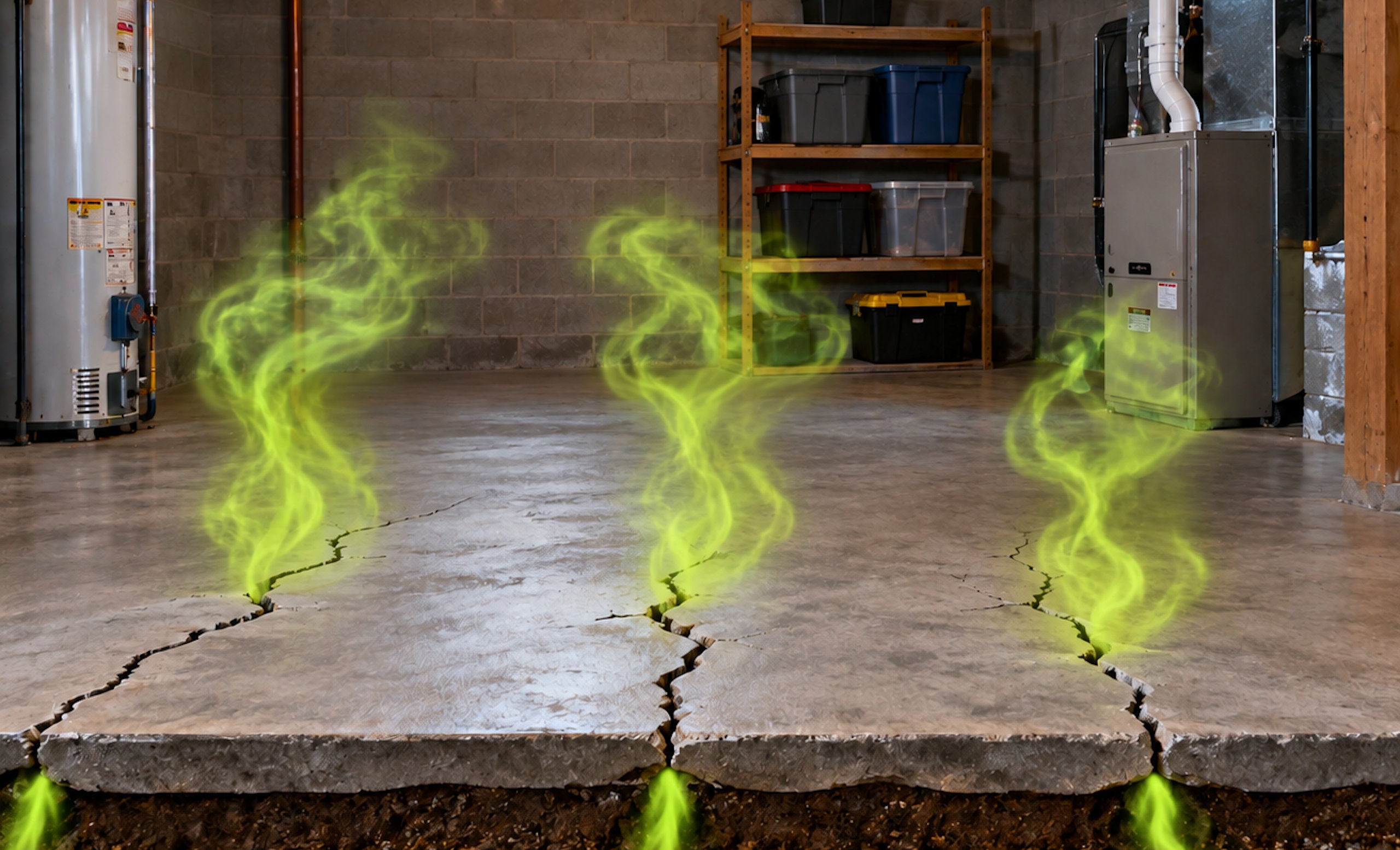
Unfortunately, when Radon gets into our homes, it can become trapped where it can then accumulate indoors, particularly in lower levels of homes such as basements and crawl spaces. Long-term exposure to elevated radon levels is a significant health concern because it increases the risk of lung cancer. Because there are usually no warning signs – you can’t see, taste, or smell radon gas, testing is the only reliable way to know whether a home has elevated radon levels.
How Does Radon Get Into a House?
Many homeowners assume Radon is caused by an issue inside the house, but the gas actually originates in the ground beneath and around the structure. As warm air rises through a home, it can create a slight vacuum effect that draws soil gases upward. Radon uses this pressure difference to enter through foundation cracks, gaps around pipes, sump pits, construction joints, crawl spaces, and other openings. Even well-built homes can have radon problems because the gas can move through very small openings.
Radon is not limited to older homes. New construction, renovated homes, homes with full basements, slab-on-grade homes, and houses with crawl spaces can all experience elevated radon levels. The amount of radon entering a home depends on the geology of the area, the condition of the foundation, and how air moves through the structure. Things you often can’t see…
Where Does Radon Come From?
The source of Radon is the natural breakdown of uranium found in varying concentrations within soil and rock. As uranium decays, it releases radon gas that travels through the ground to the surface. Outdoors, radon typically disperses into the atmosphere and is not usually a concern, but problems arise when the gas enters and becomes trapped inside of buildings. Certain regions have higher radon potential due to local geology, but elevated levels can be found almost anywhere. This is why every home should be tested regardless of location or age.
The Good News: Radon Problems Are Easy to Fix
Discovering elevated radon levels can sound alarming, but the installation of a Radon Mitigation System is a simple, and proven, solution that is able to address Radon levels inside of your home to ensure that your property is safe. A qualified radon mitigation company like Disaster Blaster can design a system that safely captures radon gas before it enters the living space and vents it above the home. In most cases, mitigation systems are installed with minimal disruption to daily life.
A typical system includes a vent pipe and a specialized fan that continuously draws radon from beneath the foundation and releases it safely outdoors. Once installed, the system can dramatically reduce indoor radon levels and help provide peace of mind for homeowners.
Why Choose Disaster Blaster?
At Disaster Blaster, protecting homes and families is the top priority. Our trained professionals evaluate each property, recommend the appropriate mitigation strategy, and ensure the system is installed according to industry best practices. We help homeowners understand their test results, address elevated radon levels, and create a healthier indoor environment.
If you have not tested your home for radon, now is the perfect time. Testing is simple, mitigation is effective, and the team at Disaster Blaster is ready to help keep your home safe.
We hope this information was helpful and answers some questions you had about where Radon comes from and how it gets in your home. If you ever need help addressing a Radon issue in your home, please don’t hesitate to Contact Your Local Disaster Blaster. We are always happy to help!
Interested in older news stories? Please see our News Archive.