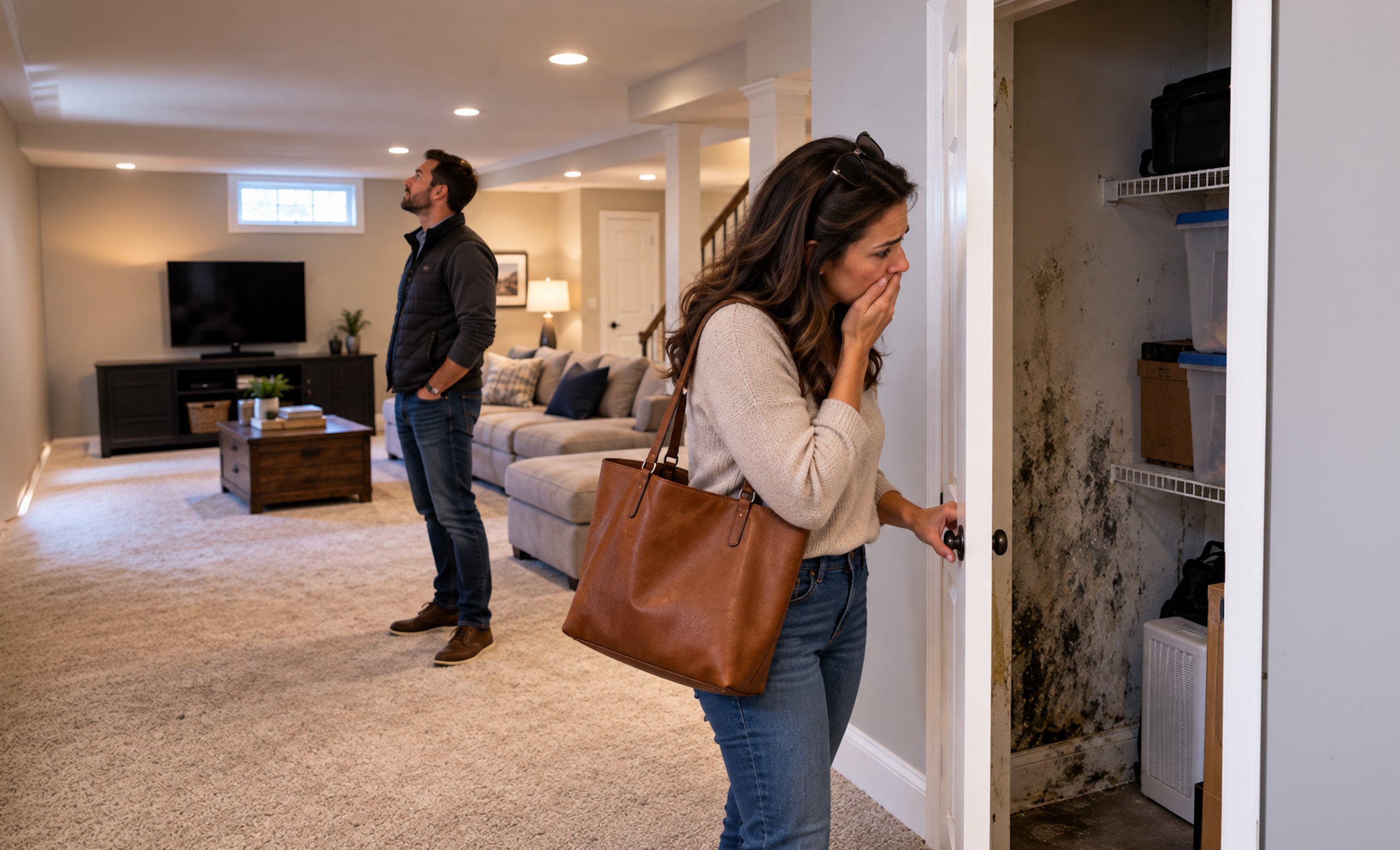
A finished basement can be one of the most attractive features of a home. It can provide valuable living space for recreation, entertainment, guest accommodations, home offices, or growing families. However, because basements are located below grade, they also present unique risks that buyers should carefully evaluate during the purchasing process.
While a beautifully finished basement may look move-in ready, cosmetic finishes can sometimes conceal moisture issues, structural concerns, or code deficiencies. Before moving forward with a purchase, it is important to understand what to look for and what certain findings could mean for your investment.
Signs of Previous Water Intrusion
Water stains, discoloration, warped materials, or repaired wall sections can indicate that the basement experienced moisture problems in the past. Even if the space looks clean and freshly finished, buyers should investigate whether water issues were fully resolved or simply covered up.
What It May Mean and How to Address It: This may mean additional inspections are needed before completing the purchase. Ask for documentation of repairs, waterproofing work, and any history of flooding or water intrusion. A qualified home inspector can help determine whether the problem appears resolved or if further corrective measures may be necessary.
Finished Walls Hiding Foundation Surfaces
Finished basements often conceal foundation walls behind drywall or paneling. While this creates a comfortable living space, it can also make it difficult to identify cracks, seepage, or structural concerns during a showing.
What It May Mean and How to Address It: For a home purchase, this may mean accepting some uncertainty about the condition behind finished surfaces. Consider hiring an inspector experienced with finished basements and ask whether selective inspection openings or additional evaluations are warranted.
Musty Odors
A musty smell is often a warning sign of excess humidity, moisture intrusion, or hidden mold growth. Even if no visible damage is present, persistent odors suggest conditions that should be investigated further.
What It May Mean and How to Address It: Buyers should determine the source rather than assuming it is a minor issue. Additional moisture testing, ventilation improvements, dehumidification, or repairs may be needed to prevent future problems.
Mold Concerns
Finished basements can sometimes hide mold growth behind drywall, flooring, or trim. Mold often develops when moisture remains trapped in poorly ventilated spaces.
What It May Mean and How to Address It: The presence of mold may require remediation and correction of the underlying moisture source. Buyers should evaluate the scope of any problem and factor potential cleanup costs into their purchasing decisions.
Egress and Safety Requirements
Not all finished basements were completed with proper emergency exits. Bedrooms and living areas below grade may require egress windows or other safety features depending on local codes.
What It May Mean and How to Address It: A lack of proper egress could limit how the space can be used and may require upgrades after purchase. Buyers should verify that the finished area meets applicable safety standards and permitting requirements.
Permits and Code Compliance
Some basement finishing projects are completed without permits or inspections. While the work may appear attractive, hidden code violations can create future challenges.
What It May Mean and How to Address It: Buyers should request records showing permits and final approvals when available. Unpermitted work may require upgrades, corrections, or additional reviews after the home changes ownership.
Flooring Condition
Basement flooring can reveal clues about moisture performance. Buckling, lifting, staining, or soft spots may indicate water-related problems beneath the finished surface.
What It May Mean and How to Address It: These conditions may require flooring replacement and investigation into underlying moisture sources. Understanding the cause is just as important as addressing the cosmetic damage.
Insulation and Energy Efficiency
Finished basements can significantly improve comfort, but poorly designed insulation systems may contribute to condensation and energy loss. Some older finishing methods fail to adequately control moisture.
What It May Mean and How to Address It: Buyers may need to improve insulation, air sealing, or humidity control to maximize comfort and efficiency. An energy evaluation can help identify opportunities for improvement.
HVAC and Ventilation
A comfortable finished basement depends on proper heating, cooling, and air circulation. Spaces that feel damp, stuffy, or significantly different in temperature from the rest of the home may have ventilation shortcomings.
What It May Mean and How to Address It: Additional ductwork, ventilation upgrades, or dehumidification equipment may be needed. Buyers should assess whether the current system adequately serves the finished space.
Drainage and Waterproofing Systems
Many quality finished basements include sump pumps, drainage channels, or waterproofing systems designed to manage water intrusion and humidity. Understanding how these systems operate is important before purchasing the home.
What It May Mean and How to Address It: Buyers should ask about maintenance history, warranties, and any past water events. Ongoing maintenance may be necessary to keep basement protection systems operating effectively.
Radon
When your basement is an inviting, finished, space, it’s only natural that you’ll spend more time down there, which makes the potential for Radon issues all the more important. As Radon gas can seep into homes and collect in lower levels, your family could be exposed to this dangerous, radioactive, gas, without you even realizing it.
What It May Mean and How to Address It: Fortunately, Radon issues can be addressed effectively through the installation of a Radon Mitigation System by a licensed professional like your local Disaster Blaster. This work can often be completed in less than a day, ensuring that you can safely use your finished basement space.
We hope this information was helpful and answers some questions you may be asking about finished basements. If you discover anything during your home tour, don’t hesitate to Contact Your Local Disaster Blaster. We are always happy to help!
Interested in older news stories? Please see our News Archive.