Fall brings beautiful color to trees and landscapes, but those falling leaves can create serious problems for homeowners if they are not removed promptly. As leaves accumulate around different parts of your home, they can trap moisture, block drainage systems, and redirect water where it does not belong.
When rainwater cannot flow away from your property properly, the result can be costly damage to roofing materials, siding, foundations, basements, and landscaping. Here are six common places where fall leaves can contribute to water damage as well as some tips to prevent problems before they start.
Gutters
Leaves are one of the most common causes of clogged gutters. When gutters become packed with debris, rainwater can no longer flow freely through the system. Instead, water may overflow along the roof edge, damaging fascia boards, siding, and landscaping. In colder climates, clogged gutters can also contribute to ice dams that force water beneath roofing materials and into your home.
Clean gutters if you see a buildup of debris. It’s always a good idea to clean your gutters in the fall and again in the spring after winter to prevent blocked gutters. Installing quality gutter guards can reduce debris buildup, but periodic inspections are still important. Keeping gutters clear allows water to move safely away from your home.
Downspouts
Even if gutters are clean, leaves can collect inside downspouts and create blockages. When downspouts cannot discharge water efficiently, the entire gutter system backs up and spills water near the home. This excess moisture can saturate soil around the foundation and increase the risk of water intrusion.
Check downspout openings and extensions throughout the fall. Flush them with water to verify proper drainage and remove any visible obstructions. Make sure downspouts discharge water several feet away from the foundation.
Roof Valleys
Roof valleys are designed to channel large volumes of water off the roof. When leaves accumulate in these low areas, they create dams that slow drainage and hold moisture against roofing materials. Over time, this can accelerate roof wear and increase the potential for leaks.
Remove leaves and debris from roof valleys using safe roof-access practices or a professional roofing contractor. Routine inspections during the fall can help identify buildup before it causes water intrusion.
Window Wells
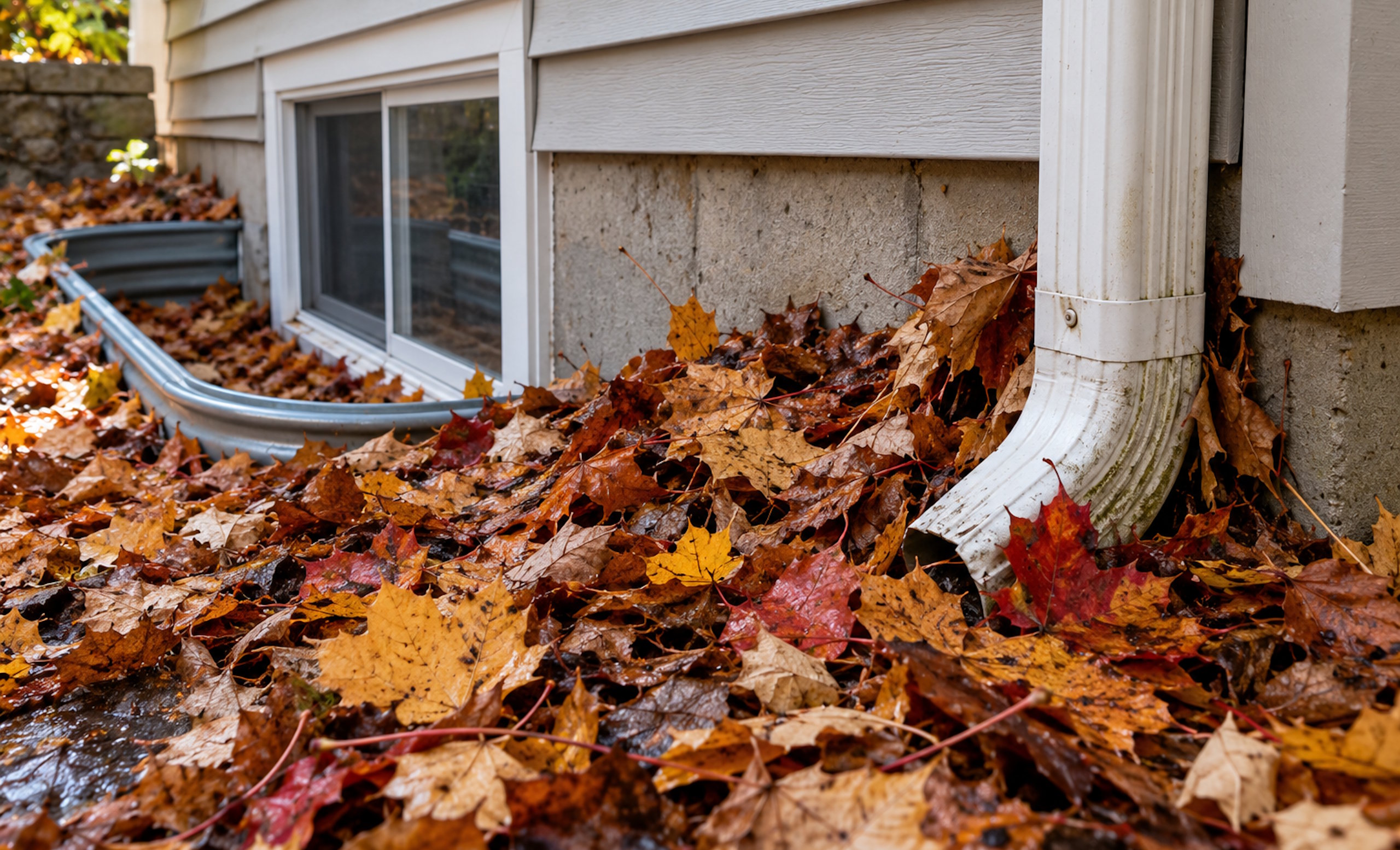
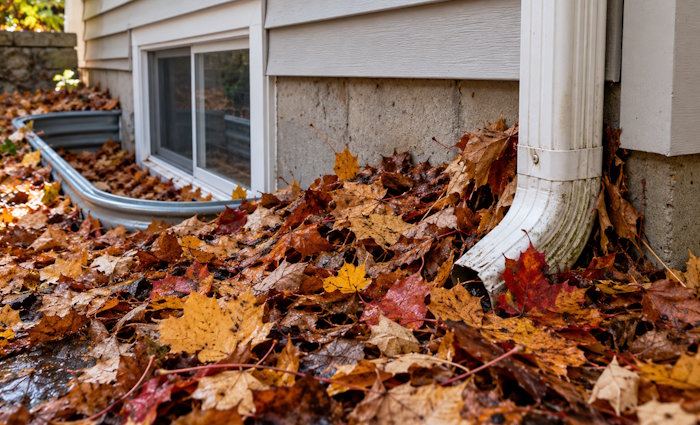
Leaves frequently collect inside window wells around basement windows. When heavy rain occurs, the debris can block drainage systems and allow water to pool against the window. If the water level rises enough, it may enter the basement and cause damage to flooring, walls, and stored belongings.
Clear leaves from window wells regularly and verify that drains remain open. Consider installing window well covers that keep debris out while still allowing light into the basement.
Foundation Walls
Piles of leaves that accumulate against exterior walls and foundations trap moisture for extended periods. This constant dampness can contribute to foundation deterioration, mold growth, and opportunities for water to seep into basements or crawl spaces.
Rake leaves away from the foundation and maintain a clear gap between landscaping debris and exterior walls. Proper grading around the home also helps direct water away from the structure.
Exterior Drains
Exterior drains, including yard drains and catch basins, can become clogged with leaves during the fall. When these drainage systems are blocked, stormwater may back up and collect around the home, creating localized flooding and increasing the risk of water intrusion.
Inspect and clean exterior drains frequently throughout the season. Remove leaves from grates and surrounding areas, and test drainage during rainfall or with a garden hose to ensure water flows properly.
We hope this information was helpful and helps you avoid some fall home damage. If you discover any damage to your home, don’t hesitate to Contact Your Local Disaster Blaster. We are always happy to help!
Interested in older news stories? Please see our News Archive.