
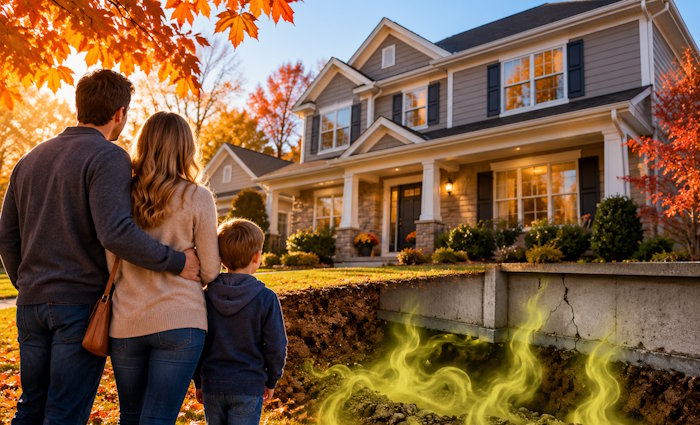
Fall is one of the busiest times of year for buying and selling homes. The weather is comfortable, families are settling into new routines, and many buyers are hoping to get into their new home before the holidays. With so much to think about during a home purchase—inspections, financing, insurance, appraisals, and closing dates—it can be easy to overlook something you cannot see, smell, or taste.
That something is Radon.
Radon is a naturally occurring radioactive gas produced as uranium in soil and rock breaks down. It can move through the soil beneath a home and enter through cracks in the foundation, gaps around pipes, floor drains, sump pits, crawl spaces, and other openings. Once inside, it can accumulate to potentially dangerous levels. The good news is that testing for radon is relatively simple, and if elevated levels are found, these issues can be addressed effectively through the installation of a Radon Mitigation System.
For anyone purchasing a home this fall, radon testing should be considered part of the due diligence process—not something to think about after the moving truck arrives.
You Can’t See a Radon Problem During a Walk-Through
One of the biggest challenges with radon is that it doesn’t look like a problem.
You can see things like a brand-new roof, a beautiful kitchen, a dry basement, and a recently updated HVAC system but hidden issues like elevated radon levels can easily go unnoticed. Unlike a plumbing leak or visible mold growth, radon doesn’t leave an obvious visual clue that something is wrong.
That’s why a home inspection alone doesn’t necessarily tell you whether the property has elevated radon. Radon requires a specific test designed to measure the concentration of the gas in the indoor air.
And the age of the home doesn’t necessarily protect you. Older homes can have radon problems, but so can newly constructed homes. A finished basement doesn’t eliminate the possibility, either. In fact, because radon commonly enters from the soil beneath and around a structure, homes with basements and other below-grade spaces can be particularly important to test.
Why Fall Is a Good Time to Test
Radon levels can fluctuate throughout the year, and testing conditions can be influenced by weather, ventilation, and how a home is being used.
During the colder months, homes are typically closed up more tightly. Windows remain closed, doors aren’t left open as often, and families spend more time indoors. These conditions can contribute to radon accumulating inside a home and increase the potential for you and your family to be exposed to greater concentrations of radon gas over longer periods.
That makes fall an excellent reminder for homebuyers to put radon on their checklist.
If you’re purchasing a home and the property hasn’t been tested recently, consider discussing radon testing with your home inspector or another qualified testing professional. A short-term test can provide an initial measurement, while longer-term testing can provide a more representative picture of a home’s average radon concentration.
What Happens If the Test Finds Elevated Radon?
Finding elevated radon doesn’t necessarily mean you should walk away from a house.
It does, however, mean you should understand the situation before completing the purchase.
Radon issues aren’t permanent or costly to address as radon issues can be resolved through the installation of specialized Radon Mitigation Systems. These systems are designed to reduce radon levels by collecting radon from beneath or around the home and safely exhausting it to the exterior. These systems are designed for the particular needs of your home and your local Disaster Blaster is happy to assist in identifying what may be necessary to address the radon issue so that you can safely move into your dream home.
For a buyer, this information can also become part of the negotiation process. If elevated radon is discovered before closing, the buyer and seller may be able to agree on who will address the issue and how the work will be handled.
The important thing is to find out before you own the problem.
Don’t Assume a Previous Test Tells the Whole Story
You may come across a previous radon test during the home-buying process. That’s useful information, but don’t automatically assume an old test means the property is permanently cleared of radon concerns.
Radon levels can change over time. Changes to a home, foundation conditions, ventilation, soil conditions, or other factors can affect the path radon is following to the surface and how much radon may be entering the home. A previous test can provide valuable history, but depending on its age and circumstances, your real estate professional or radon professional may recommend additional testing.
It’s also important to understand exactly what kind of test was performed, when it was performed, where it was placed, and what the results were.
Make Radon Part of Your Home-Buying Checklist
When you’re buying a home, you’re making one of the largest investments of your life. You inspect the roof. You check the plumbing. You look for signs of water damage. You evaluate the electrical system. You ask questions about the heating and cooling equipment and radon deserves a place on that list.
You don’t need to be able to see a problem for it to be worth investigating. A simple test can tell you whether radon levels deserve further attention, giving you information you can use before you finalize the purchase.
And that’s really what a good home inspection and due-diligence process is all about: knowing what you’re buying.
So, if you’re house hunting this fall, don’t just look at the kitchen, the bathrooms, and the backyard. Take a look beneath the surface, too.
Before you sign on the dotted line, make sure you know what’s in the air you’re going to breathe.
Don’t Panic
There’s no need to panic if you are purchasing a home and the radon level is elevated. Radon is a common issue with proven solutions available to address them effectively.
You already love the home, addressing the radon issue is just one project to make it perfect…
We hope this information was helpful and answers some questions you had about Radon and why it’s so important to test for these issues when buying a home. If you ever need help addressing a Radon issue in your home, or home-to-be, please don’t hesitate to Contact Your Local Disaster Blaster. We are always happy to help!
Interested in older news stories? Please see our News Archive.