Severe storms can develop quickly, bringing heavy rain, strong winds, and saturated ground conditions that put homes at risk. When rainfall exceeds the capacity of gutters, grading, drainage systems, or surrounding soil, water may begin finding its way into basements, crawl spaces, garages, and living areas. Even a small amount of water intrusion can create significant problems if it is not addressed promptly.
In many cases, homeowners are surprised by how fast water can enter a home during a storm event. Rainwater may seep under exterior doors, flow through foundation openings, or enter through low-lying areas around the property. Groundwater can also rise during periods of prolonged rainfall, placing pressure on foundations and allowing moisture to move into the structure. Understanding your insurance coverage and taking immediate action can help minimize damage and reduce the risk of long-term issues.
Is Rain Water That Comes Into Your House Covered by Insurance?
Insurance coverage for water entering a home depends on the source of the water and the details of your policy. In many situations, standard homeowners insurance may cover certain types of sudden and accidental water damage, but it often does not cover flooding or groundwater intrusion. Because policies can vary significantly, homeowners should review their coverage carefully and speak with their insurance representative to understand what is and is not covered.
While not always the case, a common rule of thumb is that – if the water hit the ground before entering your home, it is generally not covered.
Regardless of the cause, or whether or not the damages are covered, documenting the affected areas with photos and videos can be helpful when discussing a potential claim and identifying the scope of damage.
What Should You Do If Rain Water Comes Into Your House?
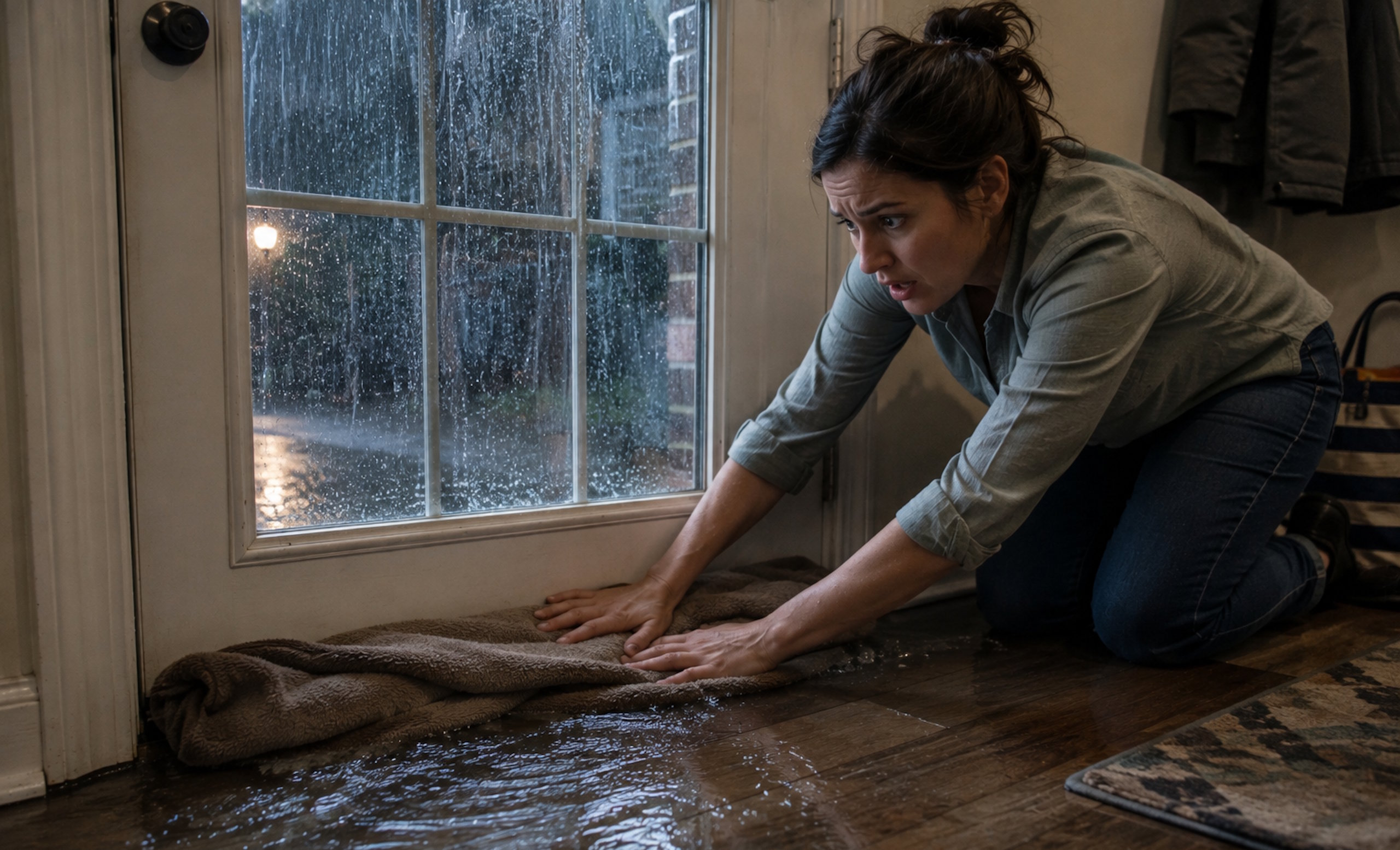
The most important step is to act quickly. If it is safe to do so, begin removing and cleaning up as much standing water as possible. If water is entering under an exterior door, for instance, use towels, barriers, or other materials to block the bottom of the door and reduce additional water intrusion while the storm is ongoing. Moving contents away from wet areas and increasing airflow can also help limit damage.
After taking these immediate steps, contact a professional mitigation and drying company such as Disaster Blaster. Professional drying equipment and moisture detection tools can identify water that may be trapped beneath flooring, inside wall cavities, or within other building materials to ensure that everything is taken care of properly and effectively. Not addressing water intrusion quickly can allow hidden moisture to remain in the structure, creating conditions where mold can develop or long term structural damage can occur. Wet materials concealed under floors or behind walls can also deteriorate over time, leading to additional property damage and more expensive repairs. A professional mitigation team can help ensure the property is thoroughly dried, reducing the risk of future problems and helping restore your home as quickly as possible.
We hope this information was helpful and answers some questions you had about water intrusion during rain storms. While we hope you never have to deal with this yourself, if you ever do, please don’t hesitate to Contact Your Local Disaster Blaster. We are always happy to help!
Interested in older news stories? Please see our News Archive.