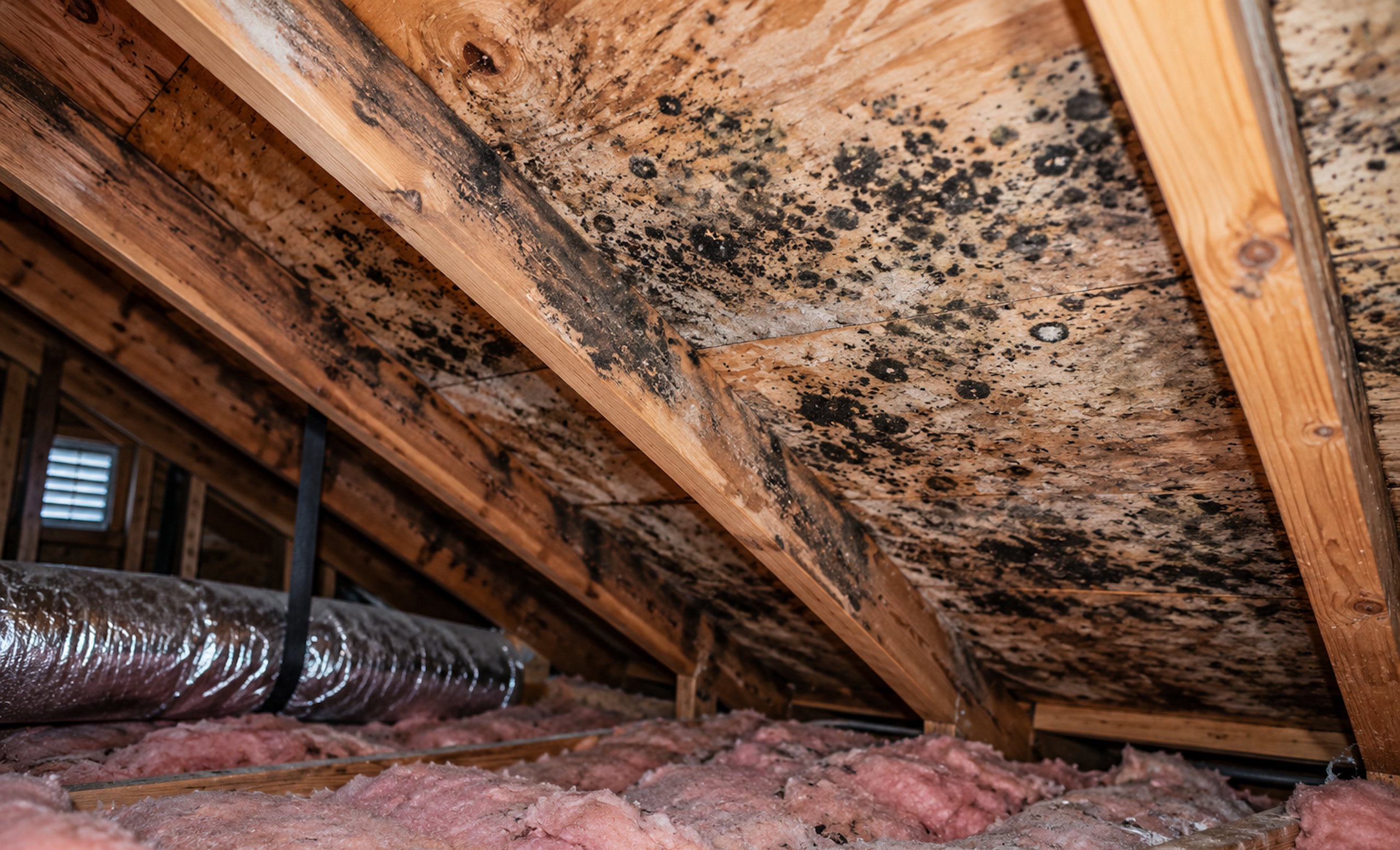
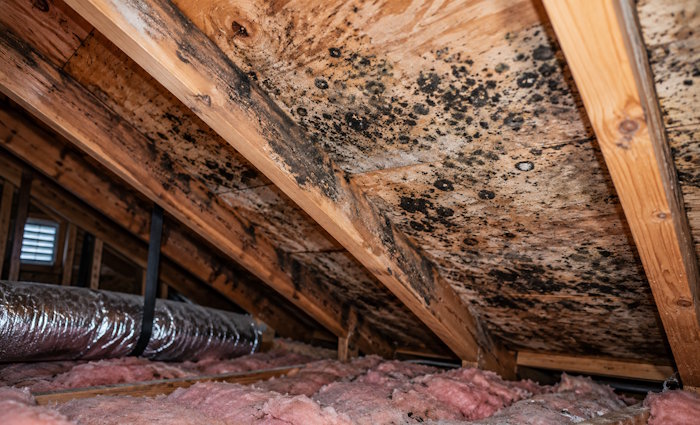
Many homeowners are surprised to discover Mold Growth in their attic during the fall or winter months, but in reality, these cooler seasons create ideal conditions for hidden moisture problems to reveal themselves. While mold may have been slowly developing for months, the change in outdoor temperatures often causes moisture to become visible and allows microbial growth to accelerate on cooler attic surfaces.
As temperatures drop, the dew point also drops. While warm air inside your home naturally holds moisture from everyday activities such as showering, cooking, laundry, and even breathing, colder air in your attic can hold less moisture, potentially leading to mold problems. When the temperatures drop, moisture trapped in attic spaces can condense on surfaces where water damage and mold issues can quickly result…
The good news is that attic mold is often preventable when homeowners understand where moisture may be coming from and how it may become trapped in attic spaces. Below are some of the most common causes of attic mold issues during the colder months and why they occur.
Bathroom Exhaust Fans Venting Into the Attic
One of the most common attic mold causes is a bathroom exhaust fan that terminates inside the attic instead of being properly ducted outdoors. Every hot shower releases large amounts of humidity. When that humid air is discharged into a cold attic, condensation forms on wood framing and roofing materials. Over time, repeated wetting creates the perfect environment for mold growth.
Inadequate Attic Ventilation
Attics require balanced intake and exhaust ventilation to move moisture out of the space. When soffit vents are blocked, ridge vents are missing, or ventilation is poorly designed, humid air can become trapped. During cold weather, that moisture condenses on colder surfaces and remains in the attic longer than it should.
Air Leaks From the Living Space
Small gaps around light fixtures, plumbing penetrations, attic access hatches, and wiring penetrations can allow warm household air to enter the attic. Even minor air leaks can transport significant moisture during the heating season. Once that warm air reaches cold roof decking, condensation can form repeatedly.
Over-Insulated or Unevenly Insulated Areas
Insulation problems can create temperature differences throughout the attic. Cold spots on roof sheathing or framing may reach condensation temperatures more quickly than surrounding areas. In some cases, insulation also covers soffit vents, preventing proper airflow and increasing moisture accumulation.
Recent Roof Leaks or Ice Dams
Not all attic mold originates from condensation. Small roof leaks and ice dam-related water intrusion can introduce moisture directly into attic materials. If wood remains damp, mold growth may begin even when the leak appears minor or intermittent.
What Can Be Done About It?
Some homeowners can address minor moisture sources themselves by sealing air leaks, adding insulation where needed, keeping soffit vents clear, and ensuring bathroom exhaust fans terminate outdoors. Regular attic inspections can also help identify problems before substantial mold growth develops.
When professional assistance is needed, Disaster Blaster offers a comprehensive approach that goes beyond simply cleaning affected surfaces. Our team identifies the root cause of the moisture issue, develops a customized remediation strategy, and helps homeowners restore a healthier indoor environment. We understand the building science behind attic mold, condensation, ventilation, and moisture migration, allowing us to recommend solutions that provide lasting results.
Because while it’s important to address mold issues, it is equally important to correct underlying moisture sources to effectively solve a problem. Successful remediation requires identifying why moisture is present, correcting the source, safely removing contamination, and verifying that conditions supporting mold growth have been eliminated.
This is why Homeowners trust Disaster Blaster – our experience, attention to detail, commitment to customer service, and focus on solving moisture problems at their source sets us apart from other remediation firms. Our goal is to address an issue effectively so that you don’t need our help again. If you have noticed staining, visible mold growth, musty odors, water condensation or frost in your attic, or signs of excess moisture, our team can help determine the cause and recommend the most effective path forward. The sooner attic moisture problems are addressed, the easier and more affordable they are typically to resolve.
We hope this information was helpful and answers some questions you may have about why mold is such a common issue in the fall and winter. If you ever need help addressing a Mold issue in your home, please don’t hesitate to Contact Your Local Disaster Blaster. We are always happy to help!
Interested in older news stories? Please see our News Archive.